Process historian · plant historian · real-time plant database
Connect PLC, DCS and SCADA, store process history, and turn it into dashboards, trends, Python analytics and reports. Built for industrial engineers at SME manufacturers.
Capture data from your existing systems.
Reliable, high-performance historical storage.
Turn raw data into meaningful insights.
Web dashboards, Excel and open APIs.
Product tour · 60 seconds
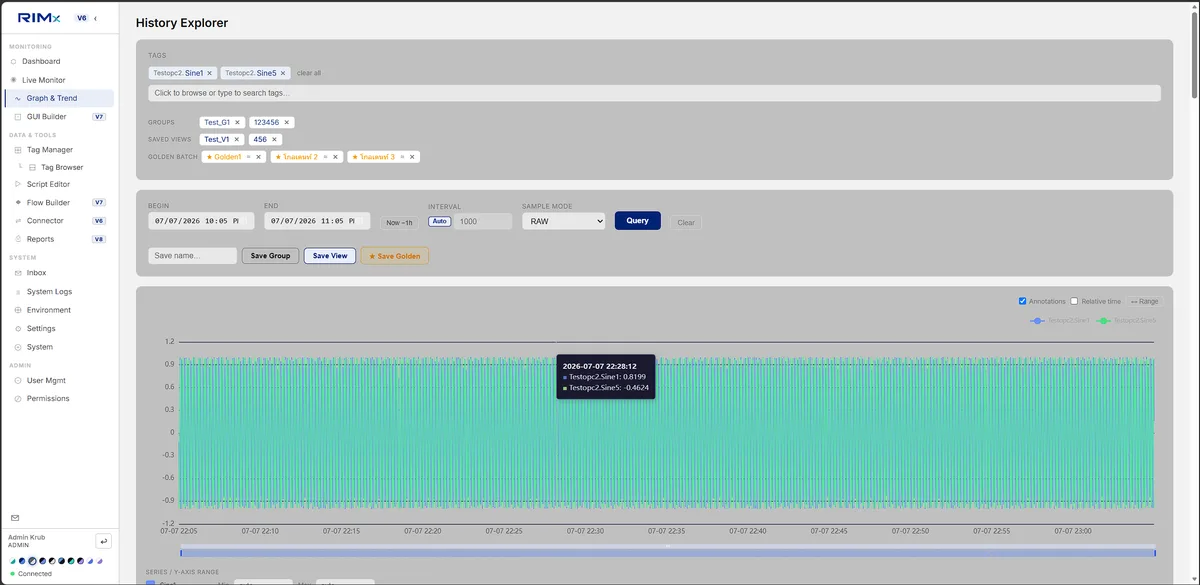
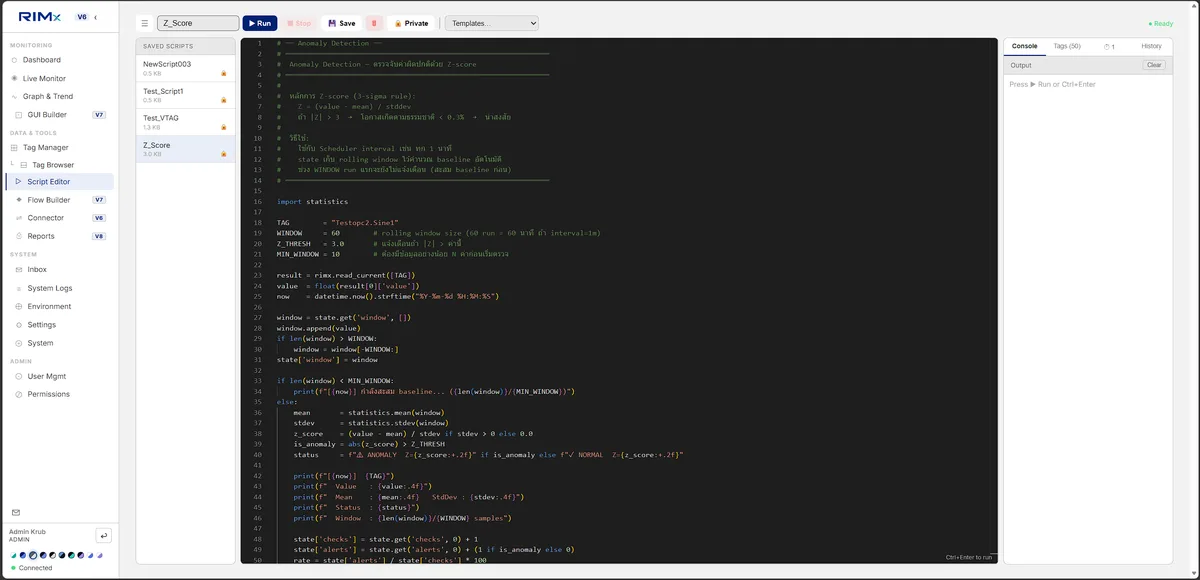
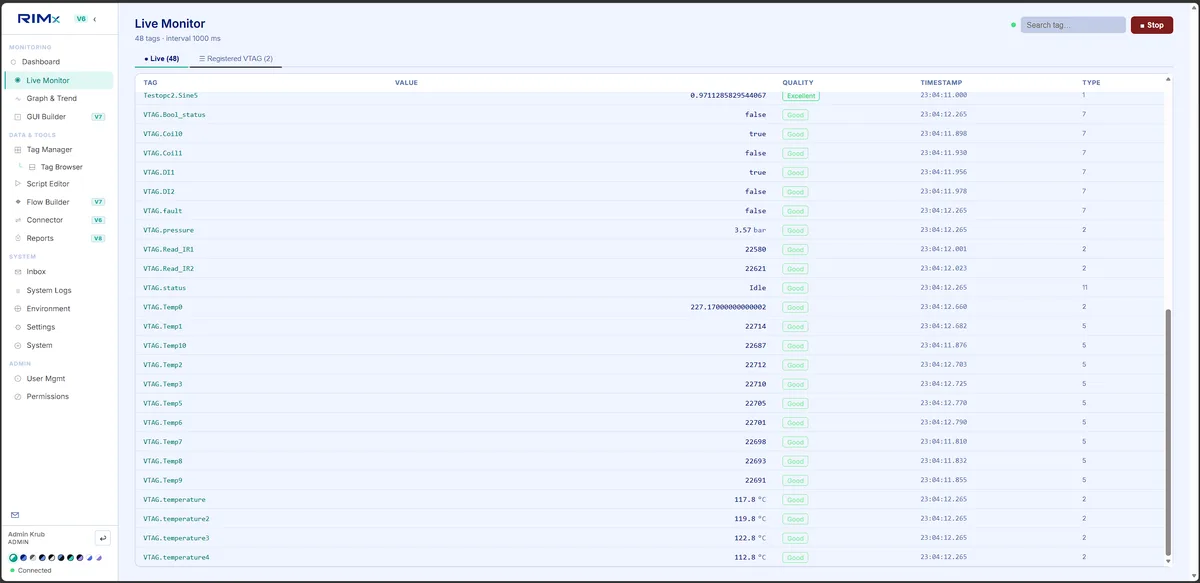
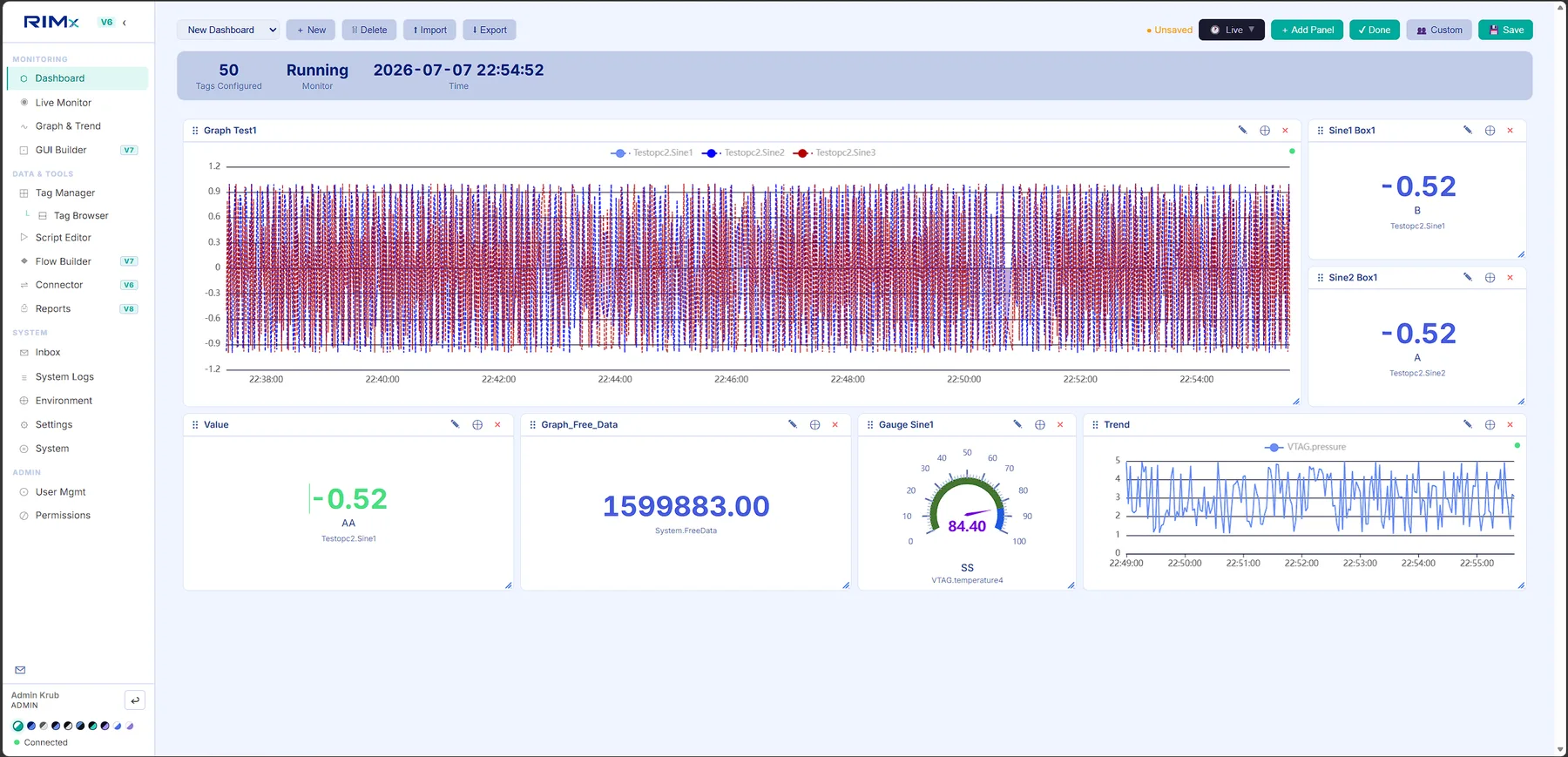
A screen recording of RIMX: live dashboards and history trends, protocol connectors including OPC UA, Python in the historian, and OEE. The DCS stays the controller.
English product UI. Live dashboards, Graph & Trend, OPC UA / Modbus / MQTT connectors, Python script editor, and OEE.
Key features
Connect to any data source with 100+ protocols and drivers.
Store millions of tags and billions of data points with speed and reliability.
Drag-and-drop dashboards and trends for live and historical data, personalized by user role.
Run Python inside the historian for KPIs like OEE, anomaly detection and machine learning.
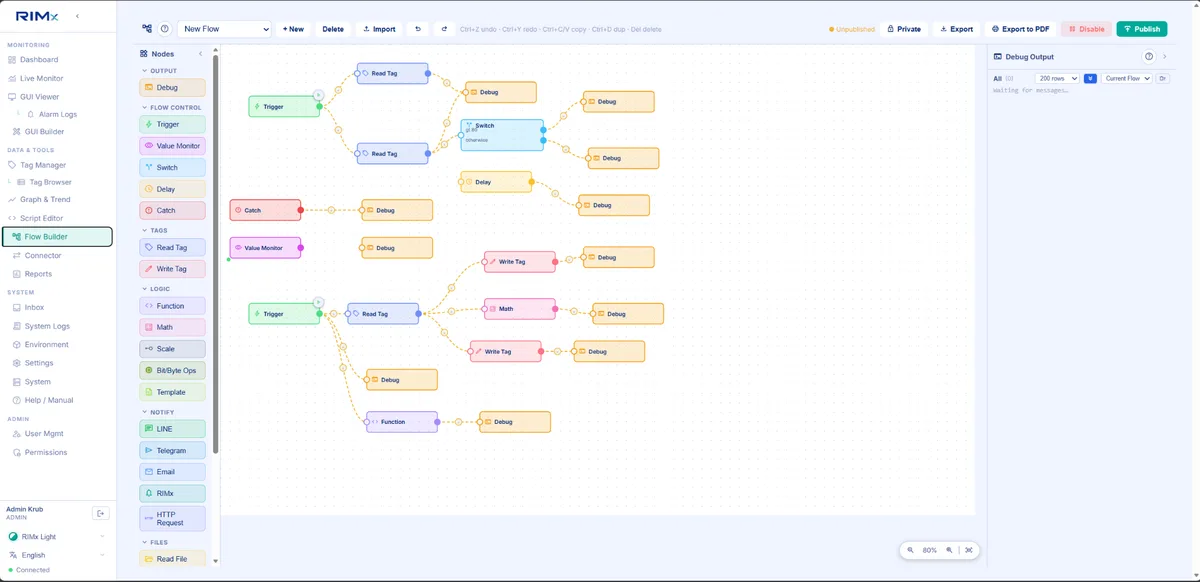
Build workflows, logic and alerts with a visual drag-and-drop editor.
Pull historian data into your existing Excel reports and refresh them in one click.
Real-time alerts by email, LINE or other channels.
Role-based read/write access, data backup and high availability.
Build your own web and mobile apps, and integrate with ERP, MES and CMMS.
Connects to your existing systems
See it in action
Low resource usage and simple architecture. Runs on modest hardware.
Quick to install and configure. Get data flowing in days, not months.
Open protocols, open APIs and flexible integration. No vendor lock-in.
Access anywhere, anytime. No client installation required.
Business impact drivers
Reduce disruptions and keep your plant running.
Fewer breakdowns, faster recovery, higher equipment availability.
Lower energy cost and improve efficiency.
Identify losses, optimize operations, reduce utility cost.
Improve product quality and reduce losses.
Less variation, less rework, higher first-pass yield.
Increase output and maximize capacity.
Bottleneck identification, higher throughput, more output.
Optimize maintenance and extend asset life.
Condition-based maintenance, lower repair cost, longer asset life.
How we start
Step 1
Pilot on one unit or area.
Step 2
Measure and validate results.
Step 3
Expand to more units and plants.
Start with a pilot on one unit and see the results for yourself.